Money mindset, messy books, missed reports—sound familiar?
Whether you’re wrapping up your year or planning ahead, financial clarity is the move for smarter business growth.
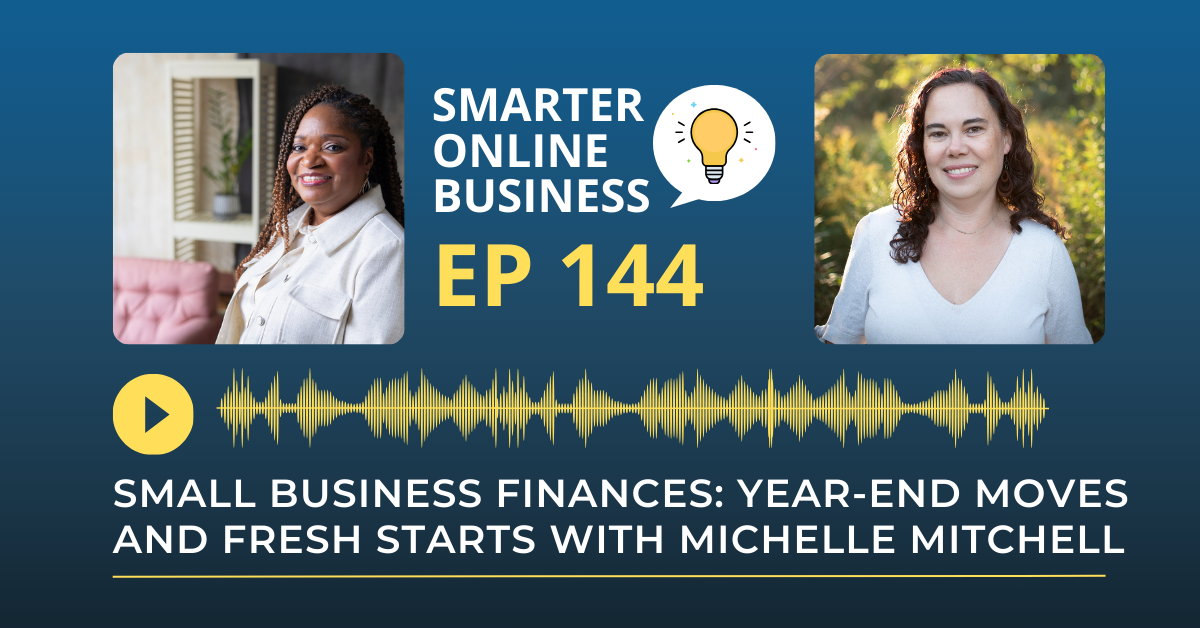
In this episode, I’m joined by Michelle Mitchell—financial strategist and founder of Mitchell Consulting—who’s known for helping powerhouse women stop being the bottleneck in their business.
Michelle doesn’t sugarcoat when it comes to money. She’s here to share real talk on:
✅ What to do before the year ends
✅ How to set yourself up financially for the new year
✅ And what most people get wrong about tools like QuickBooks
If you’re ready for more clarity and a whole lot of sparkle—this is your episode.
Let’s Recap: Small Business Finances: Year-End Moves and Fresh Starts
Financial Clarity Is About Habits, Not Hustle
Financial clarity is not about learning every accounting term or mastering a complex tool. It is about building simple, repeatable habits that let you steer your business with confidence.
In our conversation with financial strategist Michelle Mitchell, we tackled the real barriers that keep business owners stuck: money stories from childhood, fear of looking at the numbers, and the false comfort of checking a bank balance instead of an actual report.
Michelle’s message is both direct and freeing. You can be the CEO and still delegate the bookkeeping. You can avoid jargon and still make smart, timely decisions that grow profit and reduce stress.
Name Your Money Story Before It Runs the Business
A core theme of the conversation is money mindset. Many owners bring financial baggage into their business, and it shows up in decision-making.
Scarcity can freeze action and delay investments that would create capacity and revenue. On the other end of the spectrum, affluence can fuel overspending and chasing shiny tools that never return time or cash. Both patterns quietly sabotage profit.
Michelle encourages founders to name their money story first so it does not operate in the background. If your inner narrative is “I can’t afford it,” you may avoid the very investments that would relieve pressure. If you assume there will always be more, you may ignore whether something actually earns its keep.
The practical fix is clarity. Define what a return means to you. That might be more cash in the bank, hours saved, or resources gained. Then evaluate every expense against those returns and cut what does not serve the business.
The Habit That Changes Everything: Your CFO Date
From there, Michelle introduces a habit that brings everything together: a twice-monthly CFO date.
Block one hour every two weeks to review what cash is going out, confirm owner pay and tax set-asides, and look ahead 90 to 180 days at upcoming activity and spending. You are not doing bookkeeping during this time. You are steering the business.
Use the hour to note questions for your accountant and to align upcoming projects with the resources they will require. Keep the appointment even when it feels uncomfortable. Consistency builds trust, reduces avoidance, and turns numbers into a roadmap instead of a threat.
Year-End Reality and Smarter Tax Timing
We also dig into year-end realities and tax deadlines. January 31 brings W-2 and 1099-NEC deadlines. S corps and partnerships file by March 15. Personal returns are due April 15.
You cannot change last year once it is closed, but you can make this year far easier. Download bank statements monthly. Store receipts for large purchases. Collect W-9s before paying contractors. Reconcile accounts every month.
Ask your accountant to explain the key metrics you should be watching and set aside tax funds monthly. Frameworks like Profit First help build cash discipline, reduce surprises, and even allow owners to pay themselves a bonus when strategy lowers the final tax bill.
Tools Support Strategy, They Do Not Replace It
Tools matter, but they are not a cure. Platforms like QuickBooks, Xero, and FreshBooks are powerful, yet they still perform accounting behind the scenes. A messy setup leads to flawed data and bad decisions.
A clean setup by a professional can save months of rework. If funds are tight, pay for setup and training and keep that expert on call. If you can, fully delegate and focus on higher-value CEO work.
Your role is to understand the story the numbers tell: revenue mix, cost to deliver, and gross margin. If a service costs more to deliver than it earns, let it go. Profit grows faster when you tighten delivery, drop low-margin offers, and keep software bloat in check.
Align Your Time With Your Income
Finally, Michelle brings the conversation back to time.
Audit one week of work in 10-minute increments and label each activity as income-producing or not. Many owners discover hours lost to distraction or maintenance tasks that do not move revenue.
From there, plan forward. List income-producing activities for the next 30 to 90 days, estimate their impact, and assign the expenses required. When your calendar and your cash plan match, confidence follows.
Financial clarity is not a destination. It is a practice. One that turns messy books and missed reports into steady growth, calmer decisions, and a business that actually supports you.
Connect with Michelle Mitchell
Michelle Mitchell is a financial strategist and founder of Mitchell Consulting, where she helps powerhouse women stop being the bottleneck in their business. She’s known for getting real about money, calling out the patterns behind your decisions, and sparking powerful confidence through strategy and truth-telling.
Facebook | LinkedIn | Instagram | Website
Increase Your Business Profits with 3 Simple Financial Habits: https://learn.mitchellconsultingservice.com/3-habits
Is Your QuickBooks Lying to You?Fix Your Numbers Before Tax Season! Webinar: https://go.mitchellconsultingservice.com/fixmyqbo
Rate, Review, & Follow on Apple Podcasts
If you’re loving my eCommerce Made Easy Podcast, I’d be thrilled if you could rate and review the show on Apple Podcasts. Your ratings and reviews help me reach more listeners and empower more people like you to thrive in the online business world.
Just click here to head over to Apple Podcasts, scroll down, give us a five-star rating, and share what you enjoyed most about the episode in the “Write a Review” section.
If you haven’t hit that follow button yet, now’s the perfect time! I have new episodes coming your way every week that you won’t want to miss. Hit the follow button and stay up to date with the eCommerce Made Easy Podcast! Follow Now!