Have you ever felt like you should be sending a newsletter… but every time you sit down to write one, you overthink it?
Maybe you’re wondering:
- How often should I email?
- What should I even talk about?
- Am I emailing too much?
- Am I not emailing enough?
- And am I accidentally breaking some newsletter law I don’t know about?
A lot of business owners make newsletters far more complicated than they need to be. I do as well!
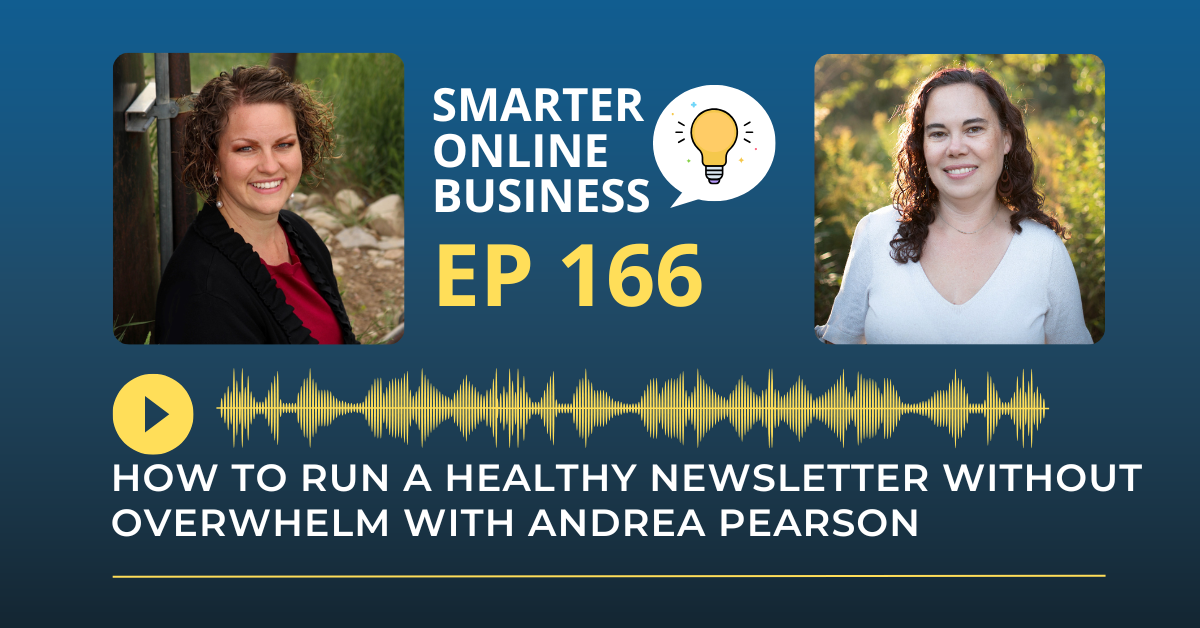
We have a special guest in todays episode, Andrea Pearson.
In this conversation, we’re talking about what it actually means to have a healthy newsletter, how often you should be emailing, what to send when you feel like you have nothing to say, and why consistency matters a whole lot more than perfection.
If newsletters have been sitting on your “I know I should do this” list or you want to improve yours, this episode is for you.
Let’s Recap: How to run a healthy newsletter without overwhelm with Andrea Pearson
Email newsletters sound simple until you sit down to write one and suddenly everything feels high stakes. How often should you email? What should you say? Are you annoying people or accidentally breaking a rule you forgot existed?
The good news is that a healthy newsletter strategy isn’t about being perfect. It’s about creating a rhythm you can realistically maintain over time.
Find an Email Schedule You Can Stick To
For most small business owners and ecommerce brands, the minimum effective email cadence is at least one email per month. Why? Because email deliverability depends on your sender reputation with providers like Gmail and Yahoo.
If you go longer than a month between emails, your messages are more likely to end up in spam folders or simply be ignored. That makes future promotions, product launches, and announcements much harder.
A practical sending schedule looks like this:
- Monthly: The minimum to maintain your sender reputation.
- Weekly: Often the sweet spot if you can consistently create content.
- Daily: Best reserved for short, clearly announced promotional campaigns.
If you do increase your email frequency during a launch, let subscribers know ahead of time. Setting expectations helps prevent surprise unsubscribes, and once the promotion ends, return to your normal schedule.
Write Subject Lines That Build Trust
Consistency doesn’t just apply to how often you email—it also helps people recognize your brand.
When subscribers regularly see your name in their inbox, your “From” name becomes part of your branding. That means you don’t need to waste precious subject line space with unnecessary prefixes.
Remember that many mobile users only see 25 to 30 characters of a subject line. Every word should count.
The best subject lines are:
- Clear
- Specific
- Honest
- Relevant to the email content
Avoid clickbait or misleading subject lines. They may increase opens once, but they’ll quickly damage trust and reduce future engagement.
Follow the Basic Email Marketing Rules
A healthy newsletter also follows basic compliance requirements, including CAN-SPAM regulations.
That means you should:
- Make unsubscribing easy.
- Never hide your unsubscribe link.
- Include a legitimate physical mailing address (a PO box or mailbox service works if you don’t want to use your home address).
While it may not be illegal in the United States to add someone to your email list without permission, doing so is one of the fastest ways to get marked as spam. That hurts your sender reputation and wastes your email marketing efforts.
Just as importantly, make sure your content matches your promises. Your subject line should accurately reflect what’s inside the email, your links should go where you say they will, and you should avoid “bait-and-switch” tactics that erode trust.
Focus on Value Before Sales
One of the biggest challenges business owners face is deciding what to write.
The simplest guideline is this: everything should connect back to your business.
That doesn’t mean every email has to be promotional. Personal stories work well when they tie into:
- A customer lesson
- Something you’re learning as a business owner
- A problem your audience faces
- How your product or service helps
Some emails may only be a few sentences long. Others may teach something in more depth. Both can be effective.
It’s also important not to ask for a sale in every email.
A good rule of thumb is to promote something about once every four or five emails. That way, subscribers experience your newsletter as a source of value rather than constant sales pressure.
If you want to include a gentle reminder about your offer, consider placing it in a consistent footer instead of adding a sales-focused PS to every email. Many readers scan the PS first, and over time, repetitive promotions become easy to ignore.
Rebuild a Cold Email List the Right Way
If you haven’t emailed your subscribers in several months, don’t jump straight into selling.
Instead, treat it like rebuilding a relationship.
Start with a reintroduction email explaining:
- Who you are
- What you’ll be sending
- How often subscribers can expect to hear from you
Then keep that promise.
Because many subscribers won’t see the first email after a long break, include a brief reminder in your footer for the next several emails while your sender reputation recovers.
If your list is especially old or you’ve recently moved to a new email service provider, it may be smarter to ask subscribers to opt in again rather than importing a stale list full of inactive or invalid email addresses that could trigger spam filters.
Most importantly, resist the urge to wake up your list only when you have something to sell. Send several value-focused emails first to rebuild trust and engagement.
The Long-Term Strategy Always Wins
Successful email marketing isn’t about sending the perfect newsletter. It’s about showing up consistently with useful, relevant content that your audience wants to receive.
When you establish a sustainable rhythm, respect your subscribers’ inboxes, and prioritize value over constant promotions, your sender reputation improves, your audience stays engaged, and your results compound over time.
Like most good marketing strategies, the biggest rewards don’t come from one great email—they come from consistently showing up over the long run.
Connect with Andrea Pearson
Andrea Pearson is a USA Today bestselling author, marketing educator, and podcast host who has published more than 85 books and helped thousands of creators and business owners build trust and sustainable income through newsletters. Andrea is known for cutting through the noise with practical, action-oriented strategies that help people move from insight to execution without overwhelm.
Grab her free Killer Subject Lines: How to Grab Subscribers guide!
Rate, Review, & Follow on Apple Podcasts
If you’re loving my eCommerce Made Easy Podcast, I’d be thrilled if you could rate and review the show on Apple Podcasts. Your ratings and reviews help me reach more listeners and empower more people like you to thrive in the online business world.
Just click here to head over to Apple Podcasts, scroll down, give us a five-star rating, and share what you enjoyed most about the episode in the “Write a Review” section.
If you haven’t hit that follow button yet, now’s the perfect time! I have new episodes coming your way every week that you won’t want to miss. Hit the follow button and stay up to date with the eCommerce Made Easy Podcast! Follow Now!