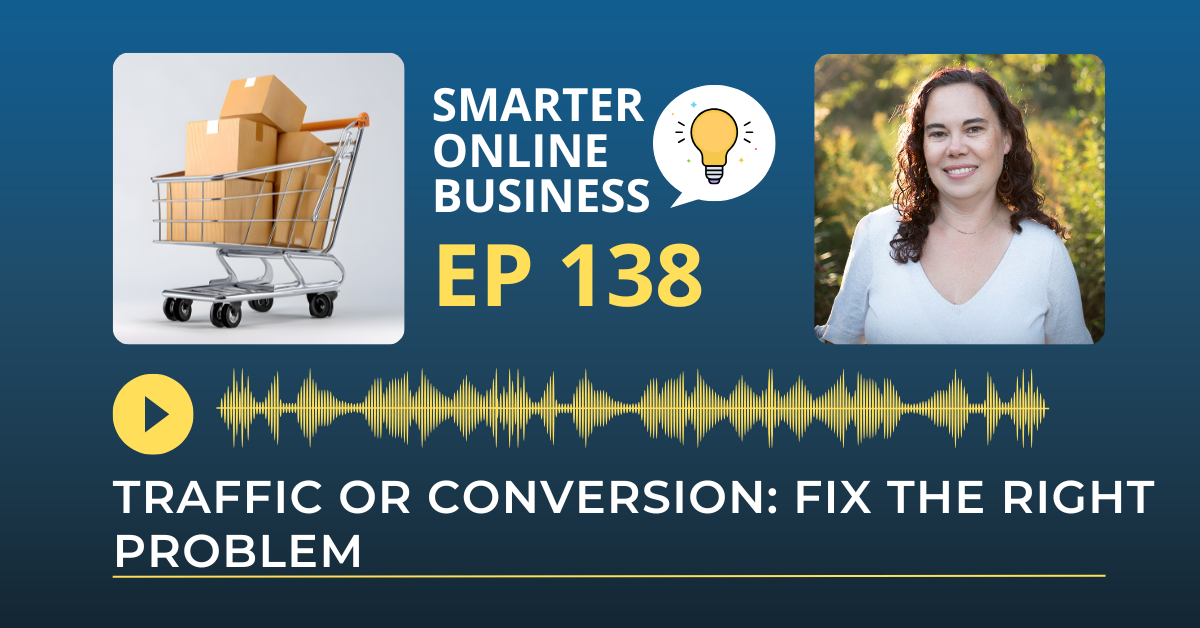
If your website’s not making the sales you hoped for, the first instinct is usually…
“I just need more traffic.”
But what if traffic isn’t the problem?
In this episode, we’re asking a smarter question:
Do you really need more visitors?
Or do you need your current visitors to actually convert?
I’ll walk you through how to tell the difference, what signs to look for, and how to stop pouring energy into traffic before your site is ready to convert it.
Let’s Recap: Traffic Or Conversion? Fix The Right Problem
Traffic Isn’t the Real Problem, Conversion Is
Many business owners assume weak sales come from not enough visitors, but traffic often hides a deeper issue: your website’s ability to convert. If your opt-ins are low, bounce rate is high, and time on page is brief, more visits will not fix the leaks.
Think of traffic as water and your site as a bucket. If there are holes in the copy, layout, or flow, pouring more water only wastes budget and energy. A smarter path is to measure what’s happening, diagnose friction, and strengthen the pages people actually see first. When you focus on conversion first, your existing audience becomes more valuable, and every future click works harder.
How to Tell If You Have a Conversion Problem
So how do you know whether you have a traffic problem or a conversion problem? Start with analytics.
If sessions are steady but sign-ups and sales lag, the offer or path is unclear. If people click around without taking action, they are confused about what to do next. Very short sessions often point to weak relevance or slow load times.
Ad performance can also be revealing. If well-written ads attract the right people but sales do not rise, the website is failing to close the loop. Misaligned targeting can cause similar issues; headlines and keywords may attract interest without intent. The fix begins with clarity: who you serve, what you do, and why it matters, stated in plain language above the fold.
Your Homepage Does the Heavy Lifting
The homepage carries outsized weight in conversion. Lead with one strong, benefit-driven headline that clearly names your audience and the outcome you help them achieve. Pair it with a clear primary call to action that stands out visually and in copy. Avoid vague labels like Learn More or Submit.
Keep navigation simple. Five to seven top-level links works well for service and course sites. For e-commerce, aim for a focused set of categories, ideally under fifteen. Design for mobile first and prioritize fast load times, since most discovery starts on phones. A clear visual hierarchy, minimal clutter, and scannable sections should guide visitors smoothly from promise to proof to action.
Trust Is the Currency of Conversion
Trust needs to be built early and reinforced often. Use strong testimonials, reviews, recognizable logos, star ratings, and real photos of you or your products. Reduce friction with visible guarantees, return policies, and easy-to-find contact options.
Fresh, helpful content also signals credibility. A regularly updated blog or resources hub shows you are active and invested in your audience. If you cannot maintain it, avoid highlighting an obviously stale feed on your homepage. Consistency matters across channels as well; the tone and promises in your social posts should match the message on your landing pages so the click delivers exactly what was promised.
Align SEO and Social With Intent
SEO does more than drive rankings. It helps align intent. When your copy speaks directly to your ideal client’s problems using their language, you attract the right searches and filter out the wrong ones.
Use specific, benefit-led phrases instead of generic jargon, and reinforce them in headings, meta data, and image alt text. On social, echo the same positioning and calls to action to maintain momentum from post to page. If an ad or post mentions a quiz, price range, or guarantee, show it immediately on the landing page. A strong scent trail reduces drop-off between click and conversion.
Quick Wins That Often Create Big Results
If you want fast improvements, start with three steps. First, refine your homepage headline so it clearly states who you help and the outcome you deliver. Second, make your primary buttons action-oriented and visually obvious. Third, ensure your opt-in or key contact method is visible above the fold.
These small changes often create outsized gains because they remove confusion and reduce the mental effort required to say yes. One client moved from pretty-but-vague to clear-and-compelling with a single headline and CTA update and doubled sales with the same traffic. Before chasing more visitors, make your current visitors’ path obvious, credible, and fast. That is how your website becomes your smartest sales tool.
Rate, Review, & Follow on Apple Podcasts
If you’re loving my eCommerce Made Easy Podcast, I’d be thrilled if you could rate and review the show on Apple Podcasts. Your ratings and reviews help me reach more listeners and empower more people like you to thrive in the online business world.
Just click here to head over to Apple Podcasts, scroll down, give us a five-star rating, and share what you enjoyed most about the episode in the “Write a Review” section.
If you haven’t hit that follow button yet, now’s the perfect time! I have new episodes coming your way every week that you won’t want to miss. Hit the follow button and stay up to date with the eCommerce Made Easy Podcast! Follow Now!