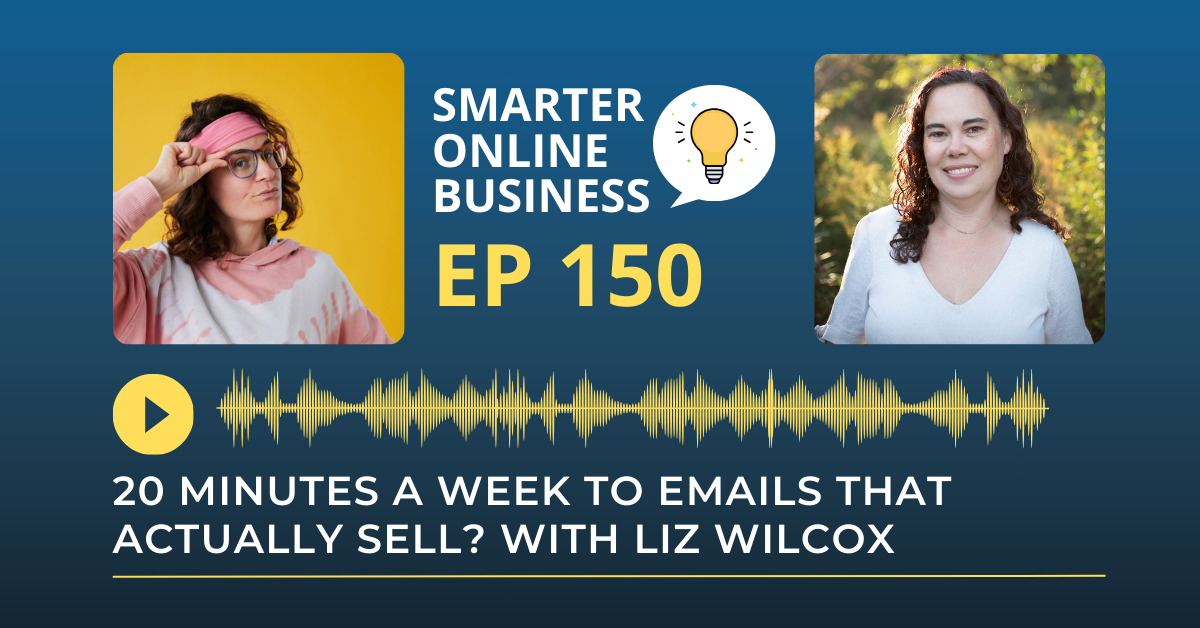
What if I told you that you only need 20 minutes a week to write emails that actually make money?
Not 20 minutes a day.
Not hours of storytelling.
Just 20 focused minutes.
Today, I’m joined by the Fresh Princess of Email Marketing herself, Liz Wilcox.
Liz is an email strategist and keynote speaker who helps small businesses build real relationships and real revenue through email. She’s turned a $9 offer into multiple six figures without ads, sold a blog, and created a simple framework called the Email Staircase that untangles all the confusion around what to send and when.
We’re talking about:
✉️ How 20 minutes a week is actually enough
✉️ What makes a subject line work
✉️ Why she doesn’t teach storytelling the way most marketers do
✉️ And what you’re probably doing wrong in your welcome emails that’s costing you sales
If email has ever felt complicated, overwhelming, or like a chore… this episode is about to make it simple.
Let’s Recap: 20 Minutes a Week to Emails That Actually Sell
Why Email Marketing Feels Hard (But Doesn’t Have to Be)
Email marketing gets a bad rap for being complicated, time-consuming, and full of jargon that never seems to lead to sales. This conversation with strategist Liz Wilcox flips that script. The big idea is radical simplicity: a 20-minute weekly framework that builds real relationships and real revenue without bloated storytelling or fancy tech.
Liz argues that the inbox should feel respected, not crowded. When you write like a friend, use short personal updates, and link to one clear action, you reduce friction and increase trust. This trust matters even more right now, when buyers are skeptical and attention is scarce. A clean, focused email is a service, not a shove.
The 20-Minute Weekly Email Framework
The 20-minute framework is refreshingly practical. Start with a quick greeting, then add a two to three sentence personal update that shows you’re a real person who shows up.
Next, hit caps lock and type “ANYWAY…” to pivot into your content for the week. That content could be:
- A podcast episode
- A webinar
- A product
- Someone else’s useful resource
Offer the link, then sign off.
That’s it. No rambling setups and no cliffhanger sagas.
Over time, this rhythm creates familiarity and keeps you top of mind between launches, when you need trust the most. Readers learn that your emails respect their time. So when you do send longer launch messages, curiosity is higher and clicks come easier.
Writing Subject Lines That Actually Get Opened
Subject lines don’t need to be mini advertisements. Liz recommends writing the email first and then titling it like you would for a friend.
One-word subjects can spark curiosity without hype. Think:
- Debate
- Update
- Nine dollars?
If you want to use prefixes, save them for specific situations such as:
- [WORKSHOP]
- [NEW EMM]
- [AFFILIATE]
Used sparingly, these signals add clarity instead of clutter.
Your sender name does much of the work. Consistency and clarity matter more than clever tricks. Keep your tone casual, avoid corporate stiffness, and remember that the goal is to get the right people to open your email, not to game an algorithm.
The Four-Email Welcome Sequence That Converts
One of the biggest places creators lose sales is the welcome sequence. Liz keeps it simple with a tight four-email structure.
Email 1: Deliver the Freebie + Set the Vision
Send the promised resource and explain what success looks like if the subscriber sticks around.
Email 2: Share Your Best Content
Give them your strongest value so that even if they never hear from you again, they walk away with something genuinely useful.
Email 3: Set Expectations
Tell them when you send emails, what you send, and that you share both free and paid resources.
Email 4: Make a Direct Offer
Introduce your best starter offer and invite them to take the next step.
Send these emails day after day while excitement is high. Only space them out if your audience truly needs more time. This sequence shifts your role from freebie provider to trusted guide with real solutions.
How to Re-Engage a Quiet Email List
If your list has gone quiet, you can repurpose that welcome sequence into a warm-up series.
Start by reintroducing yourself and sharing the vision for what readers will gain by staying connected. Then reshare your best resource with a short note explaining why it matters. Finally, make a small, time-bound offer that invites readers to re-engage.
The goal is not to apologize for silence. The goal is to lead with relevance and momentum.
Keep each email focused on one action and keep the series moving. This approach respects the inbox and avoids unnecessary explanations. It also creates a natural bridge into a flash sale without feeling abrupt.
Why Simple Emails Often Sell the Most
The payoff for this approach is real. Email marketing consistently outperforms social channels because it compounds trust over time.
Liz points to returns far above industry averages when emails stay consistent, human, and relatable. In today’s “trust recession,” small personal updates show readers that you are present and invested.
Mention the broken fridge. Share the dog walk. Talk about the new mic if it helps you serve your audience better.
These small moments are not filler. They are the connective tissue that turns a sales email into a natural next step in a relationship.
Keep it simple.
Keep it weekly.
And let your inbox become your most honest sales tool.
Connect with Liz Wilcox
The Fresh Princess of Email Marketing, Liz Wilcox is an Email Strategist and Keynote Speaker showing small businesses how to build online relationships + make real money with emails.
Facebook | LinkedIn | Instagram | Website | Email Marketing Membership
Mega Email Swipe File: Get everything you need to build a list of buyers. Seriously. One entirely-written-for-you welcome sequence. 3 newsletters templates so you can feel comfortable knowing how to follow up each week. And 52 subject lines so you never have to write an email from scratch again.
Rate, Review, & Follow on Apple Podcasts
If you’re loving my Smarter Online Business Podcast, I’d be thrilled if you could rate and review the show on Apple Podcasts. Your ratings and reviews help me reach more listeners and empower more people like you to thrive in the online business world.
Just click here to head over to Apple Podcasts, scroll down, give us a five-star rating, and share what you enjoyed most about the episode in the “Write a Review” section.
If you haven’t hit that follow button yet, now’s the perfect time! I have new episodes coming your way every week that you won’t want to miss. Hit the follow button and stay up to date with the Smarter Online Business Podcast! Follow Now!
What a ‘Smart Sales Tool’ Website Actually Looks Like